

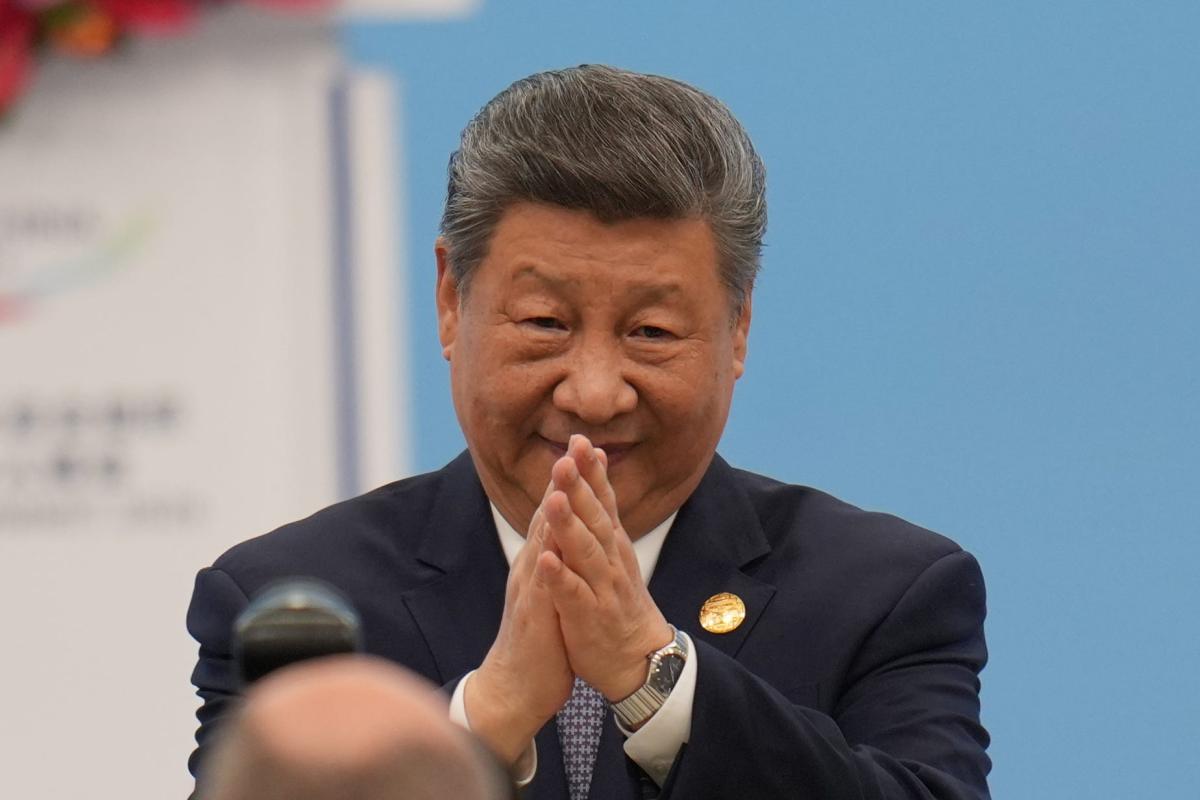

The Asia-Pacific region must pursue more open trade and equitable growth if it is to remain stable and dynamic, Chinese President Xi Jinping told business executives on Wednesday.
He was speaking in the southern Chinese technology and financial hub of Shenzhen, on the sidelines of the annual Asia-Pacific Economic Co-operation (Apec) summit.
US President Donald Trump arrived on Wednesday for the Apec leaders’ summit, travelling from the Philippines, where he attended an annual summit of the Association of Southeast Asian Nations.
Mr Trump’s “America First” approach of tariff hikes and other moves runs counter to Apec’s aim of eventually forming a Pacific Rim free trade zone.
US limits on Chinese access to leading-edge American technology, such as the Nvidia computer chips that help to power artificial intelligence, are a constant source of strain with Beijing.
Mr Xi and other Apec leaders called for a more open approach, without directly criticising the US shift towards protecting its own markets.
The summit is showcasing Shenzhen, which China has transformed in the past four decades from a fishing village into a skyscraper-studded centre for export manufacturing and technology.

China’s ascent as the second-largest economy hinged on global investments and access to world markets as global manufacturers shifted factories overseas to tap into cheaper labour and faster-growing markets.
“China will not only cut tariffs and expand market access, but also go a step further. We will carry out reform in challenging areas such as rules, regulation, and standards,” Mr Xi told the chief executives’ summit, reiterating Beijing’s pledges to improve conditions for global investors.
“While pursuing its own development, China has shared opportunities with other countries and worked for common development,” he said. “It has steadily brought stability and predictability to world economic growth and international trade and economic co-operation.”
Mr Xi’s speech highlighted China’s aim to lead global industrial transformation, said George Chen, partner and chairman of digital practice at the Asia Group.
“While he didn’t say so explicitly, his message was clear: China wants to be seen as a partner in global technology development, in contrast to Washington’s more restrictive approach,” Mr Chen said, noting that Mr Xi did not mention export controls, Nvidia or the US directly.

Mr Xi faces pressure at home from slowing growth as retail spending and investment have dragged as China endures a prolonged property market slump.
The economy is still growing at a rate of more than 4%, but that is mainly due to surging exports that are provoking a backlash among many of China’s trading partners. China’s trade surplus for this year is on track to exceed one trillion dollars for a second year in a row.
Still, Mr Trump’s emphasis on friendly relations with Mr Xi may lead to an extension of the trade truce reached last year after a series of tariff escalations.
Friction with Washington over higher US tariffs and other trade barriers is leading to realignments among other trading partners.
On Tuesday, Canadian Prime Minister Mark Carney met Mr Xi and they agreed to cut tariffs on each other’s goods. Mr Carney has cultivated tighter economic ties with China and the European Union in response to strains in Canada’s relationship with Mr Trump.
“Canada is undergoing a transformation of our own. We are turning global uncertainty into national opportunity in a more dangerous and divided world,” Mr Carney told the summit. “Canada is choosing a path towards a stronger, more prosperous, more resilient future.”
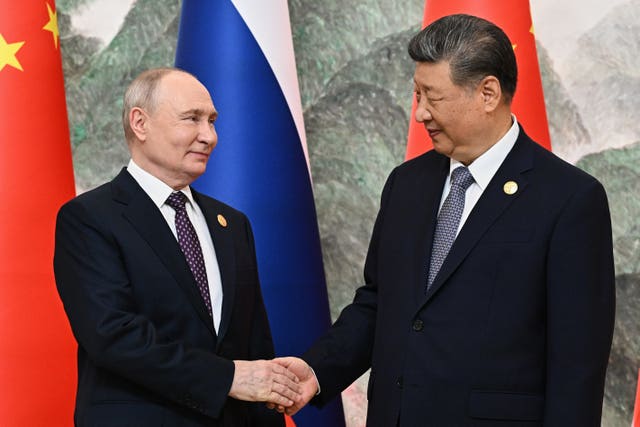
Russian President Vladimir Putin took aim at “instruments of economic dominance”, such as the sanctions imposed following the 2022 invasion of Ukraine, in his first in-person appearance at an Apec leaders meeting since 2017.
.@POTUS departs the Philippines after a highly successful ASEAN-U.S. Summit, Quad Leaders’ Summit, and historic trade deals.
Next stop: Shenzhen, China, where @POTUS will attend the APEC summit and hold key meetings with President Xi and President Putin. pic.twitter.com/e6IbAt62oy
— Rapid Response 47 (@RapidResponse47) November 18, 2026
“Sanctions, tariffs, and export restrictions” have “outlived their usefulness and have largely lost their intimidating effect”, Mr Putin told the summit.
He highlighted his country’s desire to cultivate closer economic ties with the Asia-Pacific region, saying it accounts for more than half of its total trade.
Russia has submitted a bid to chair Apec in 2035, Mr Putin said.
The 21 Apec economies account for 60% of global economic activity, half of global trade and 40% of humanity.
The leaders will meet behind closed doors on Thursday, while holding other meetings on the event’s sidelines. That will include a “trilateral” encounter between Mr Trump, Mr Putin and Mr Xi, the first such summit between those three global powers.


Share